Interview with Chilean filmmaker Diego Céspedes reveals the inspiration and symbolism behind his film The Mysterious Gaze of the Flamingo – the story of a girl and her queer family facing a mysterious illness in a Chilean town. The interview is a small preview of the print edition of Mezi zine, which will be available during the festival.
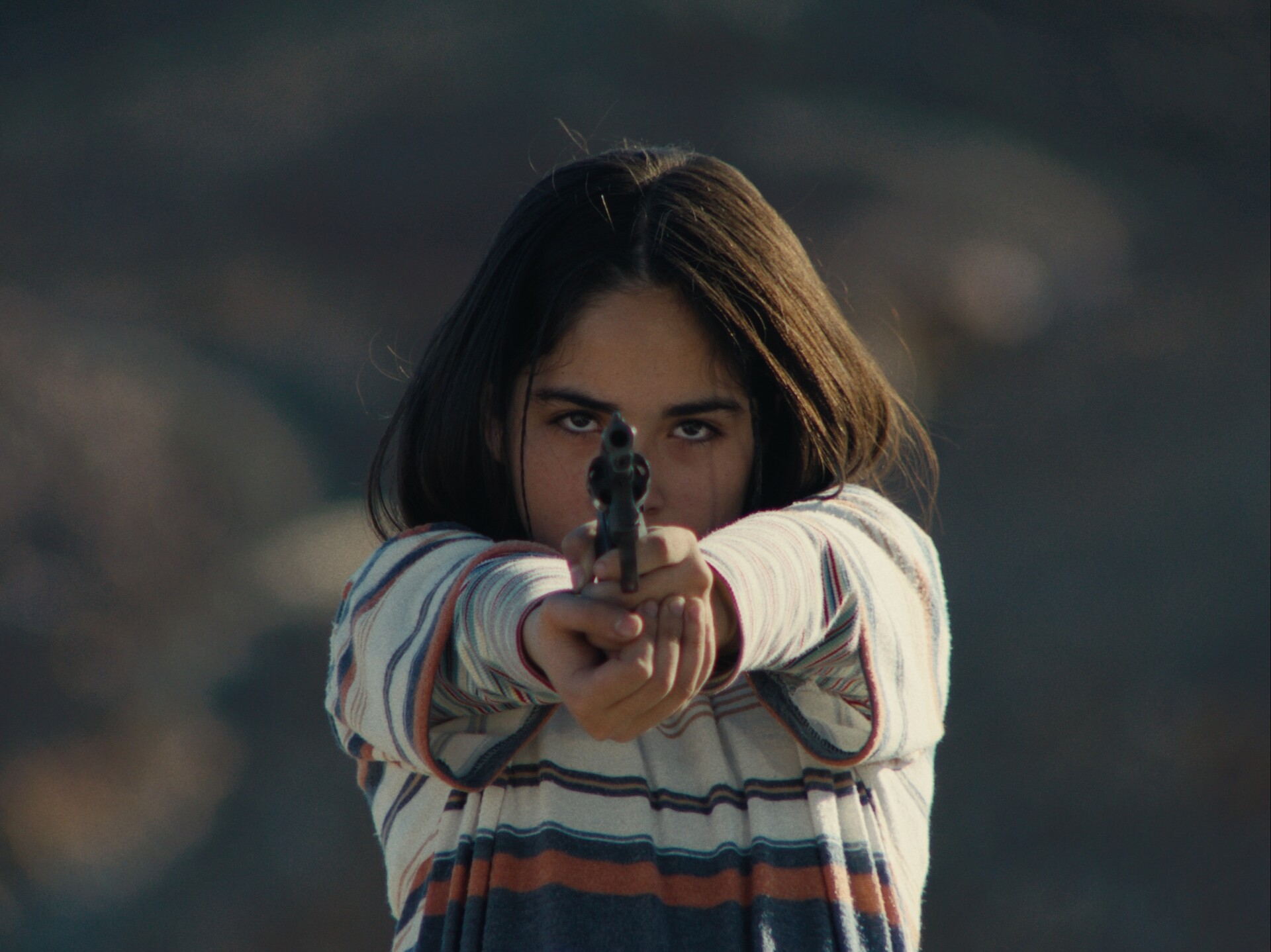
Your film is set in the 1980s Chilean desert, where 12-year-old Lidia grows up in a queer family blamed for a mysterious illness. As fear spreads, she seeks vengeance in a hostile town, where love is feared and family is her only refuge. Why did you choose to make Lidia, a young girl, the witness of the story?
When I was growing up, my mother used to watch a soap opera that featured an HIV-positive character. She talked about it in such terrifying terms that I was scared to even look. Later, after coming out, I discovered LGBTQ+ communities and it was incredible. Lidia is naturally at ease among queer individuals and, at the same time, frightened by the disease. She represents both stages of my life – one tragic and anxious, the other joyful.
In the film, there’s a rumor that HIV can be transmitted through the gaze. We see miners shielding their eyes or forcing the queer characters to blindfold themselves. Did this rumor really exist at the time?
When I began writing the script, I researched how HIV was discussed when it first emerged and found some wild stuff, including someone saying you shouldn’t look at infected people. I thought: Why wouldn’t the miners believe that? And I found the idea of the gaze quite poetic.
There’s a western feel to the film – the cabaret-house is like a saloon, right?
The western aspect is the most joyful part of the film. I watched many westerns as a kid and wanted to reconnect with that. I wanted to blend different genres. How can a child take revenge? It all happens through her imagination.
Your film reminded me of some John Ford westerns – epic male fights on one hand and community dances on the other.
This queer community builds its own world, full of both violence and tenderness. They fight when needed and love as much as they can. The miners who fight them end up dancing with them. The village is dying, people are dying. They have almost nothing – materially or emotionally – so they might as well enjoy what little they have left.
All the characters have animal nicknames: Flamingo, Boa, Piranha… Why?
It’s rooted in Chilean rural tradition. Everyone, across social classes, uses animal nicknames. A gossiping person is called a frog, for instance. Usually it’s derogatory, but I wanted to make it poetic — Flamingo for elegance and long legs, for example.
SCREENING TIMES
PRAGUE
Fri 7 Nov 2025 / 6:00 pm / Kino Světozor, velký sál BUY
Tue 11 Nov 2025 / 8:30 pm / Kino Lucerna, velký sál KOUPIT
BRNO
Thu 20 Nov 2025 / 6:00 pm / Kino Art, velký sál BUY
FILM SYNOPSIS
A single glance is enough. Eye to eye. And you’re bewitched! In 1982, a mysterious disease spreads through a parched mining town in Chile as quickly as superstition. At the heart of it all is the mystically beautiful Flamingo and her foster daughter, twelve-year-old Lidia, raised within a quirky queer family. As panic over the illness grows, Flamingo is stalked by a man with a dangerously dark gaze. Determined to protect her, Lidia sets out to uncover the true cause of the sickness before the superstitious townspeople turn against them. What hides behind the merciless plague striking down those who dare to love? Blending absurd humor with chilling moments, this magical-realist story offers a powerful reflection on human relationships and the solidarity of the queer community. At just thirty years of age, debut director Diego Céspedes won Un Certain Regard, the main prize at Cannes, as well as the Best Latin American Film award in San Sebastián.
ABOUT THE DIRECTOR

Diego Céspedes is a Chilean filmmaker. He studied Film and Television at the University of Chile.In 2018, he wrote and directed his first short film, The Summer of the Electric Lion, which won the Cinéfondation First Prize at the Cannes Film Festival and the Nest Prize at the San Sebastián International Film Festival. The film was also selected at major international festivals such as Sundance, Palm Springs, Biarritz, and AFI Fest. In 2022, he returned to Cannes with The Melting Creatures, his second fiction short film, which had its world premiere at the Cannes Film Festival's Semaine de la Critique. The short was also part of the official selection at festivals like Toronto, San Sebastián, and Clermont-Ferrand.
In addition to his work as a director, Céspedes worked as a cinematographer and editor on several short films during his university years, including Non-Castus, which received a Special Mention at the Locarno Film Festival. Currently, in 2025, he is preparing for the premiere of his first feature film, The Mysterious Gaze of the Flamingo, selected for the Un Certain Regard official section at the Cannes Film Festival.